name: Re: Form -New Life for Old Spaces. client: buildner competition. situation: 1st place
New Life for Old Spaces competition challenged architects and designers from around the world to breathe new life into neglected and forgotten spaces. As an ideas competition, Re-Form offered complete freedom in site selection, encouraging bold reinterpretations of existing buildings under 250 m²—regardless of location, program, or typology. Whether reimagining an abandoned storefront in an urban neighborhood or transforming a crumbling warehouse in the countryside, participants were invited to explore how adaptive reuse can offer sustainable and socially meaningful alternatives to demolition and new construction.
The Edge of Presence
In Iran, every two days a woman is killed by a male family member under the pretext of “honor.”
” Femicide—particularly in the form of so-called “honor” killings—has become a systemic crisis. This violence is rooted in the ideological structure of the Islamic Republic and perpetuated through discriminatory laws and judicial silence. The erasure of women from public life—through compulsory hijab and the lack of safe shelters—has been legitimized. This project responds to such structural violence and infrastructural void.
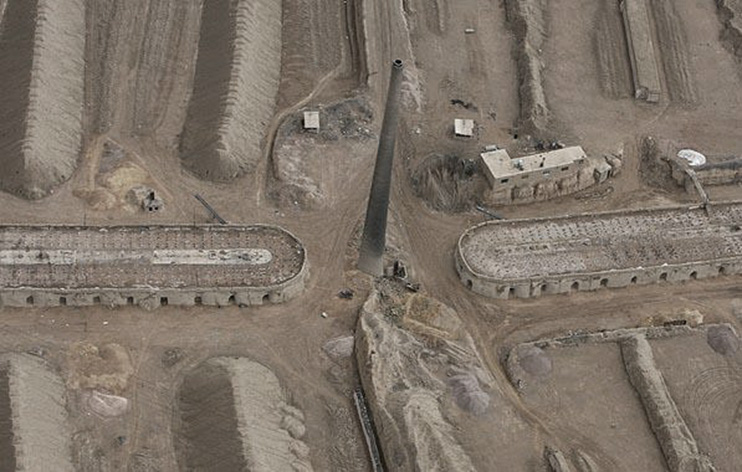
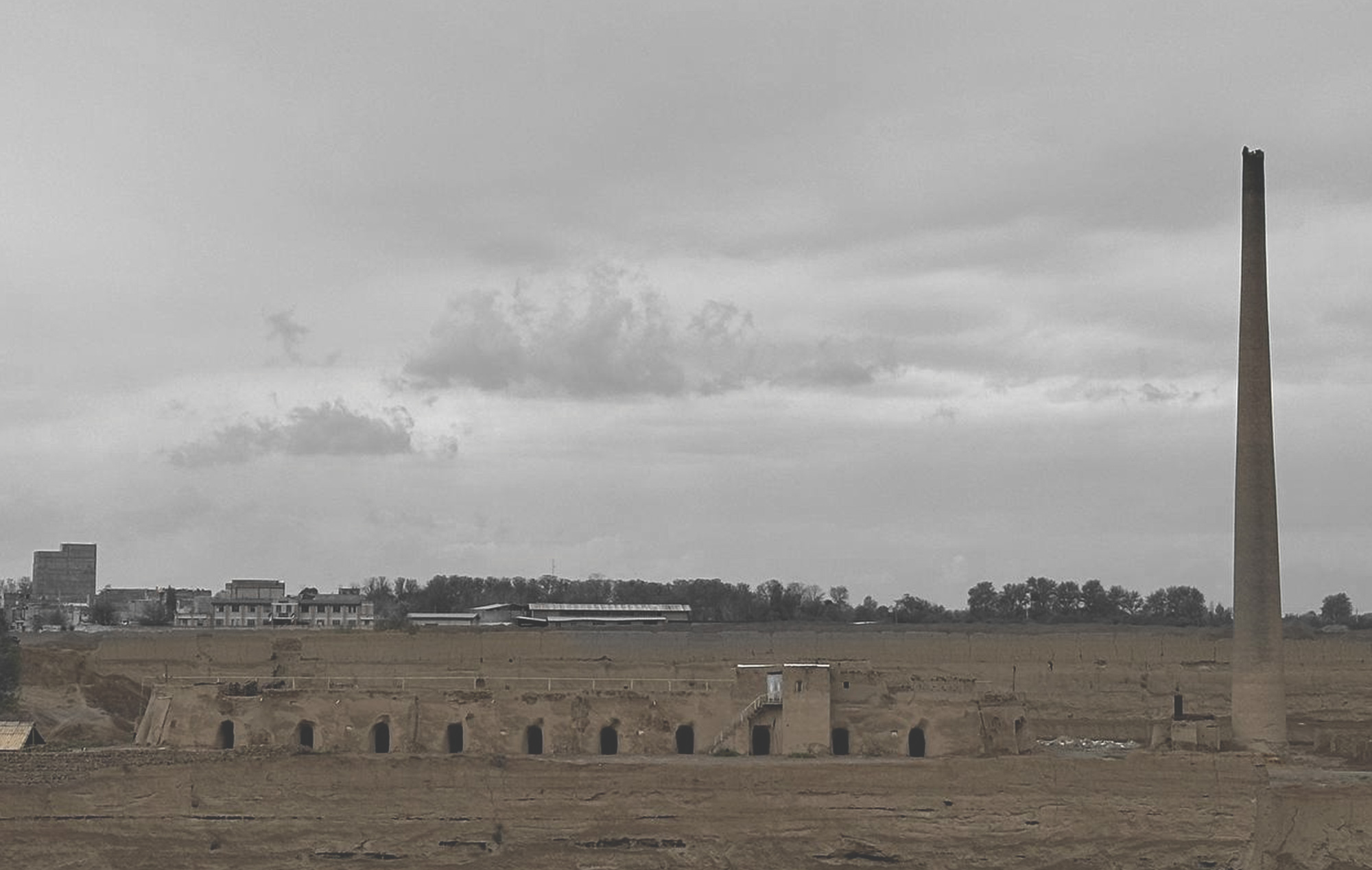
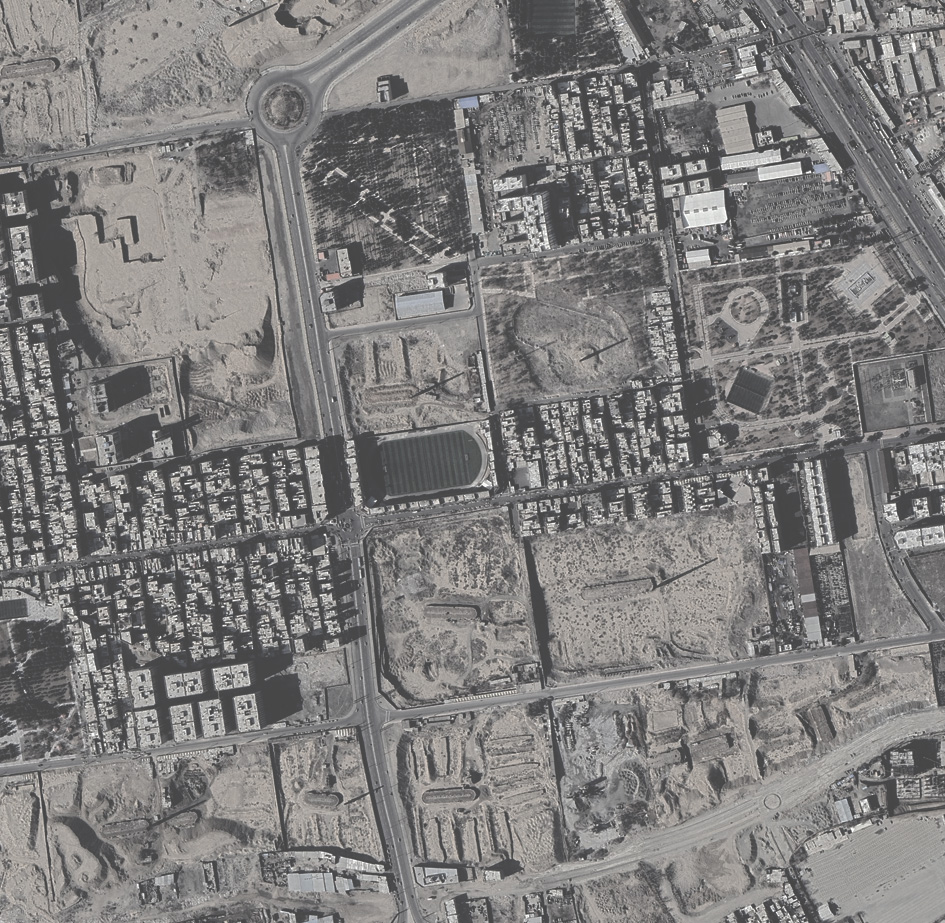
The project is situated within one of Tehran’s Hoffmann large brick kilns—industrial remnants from the late Qajar era that now lie abandoned within the expanded urban fabric.
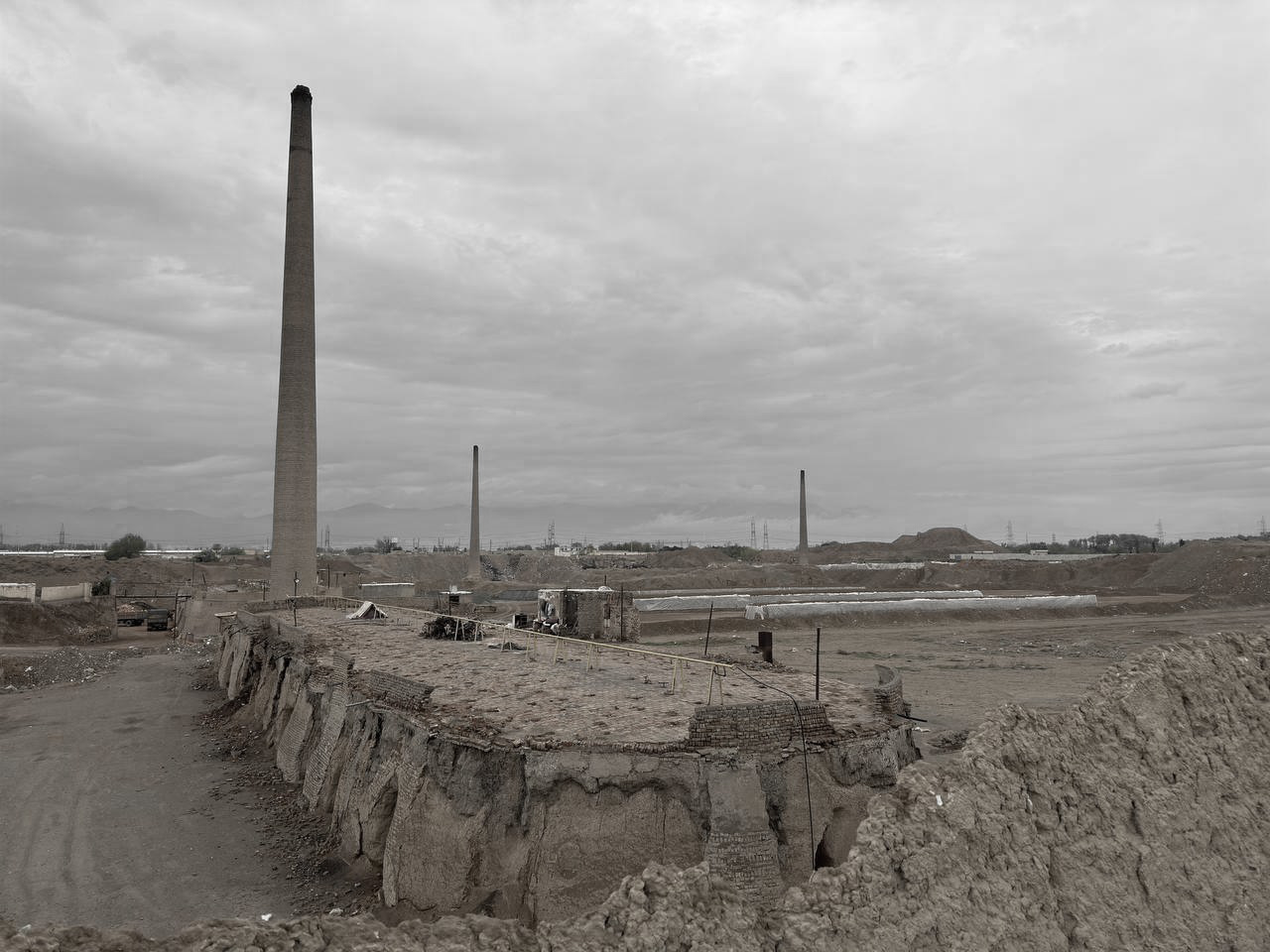
In the absence of thoughtful urban policy, these structures have turned into problematic voids. This project reclaims one kiln—not as a site of decay, but as a social and architectural possibility, reinterpreting abandonment as a platform for reinvention.
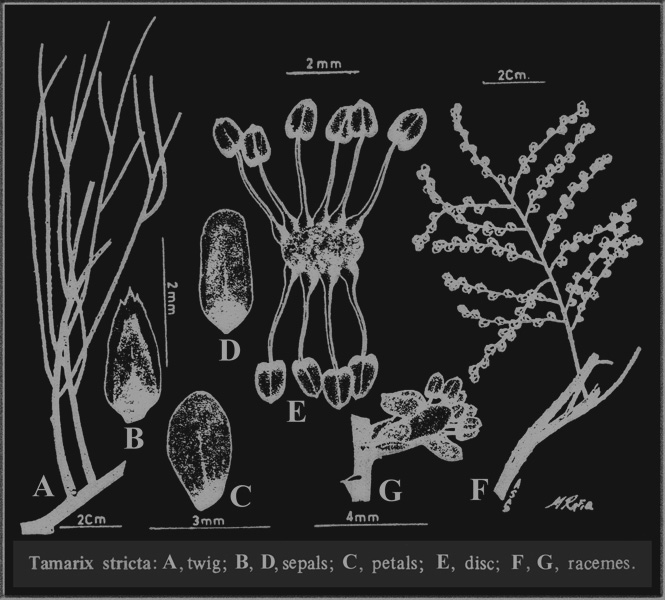
The site’s clay-rich soil offers an ideal condition for cultivating halophyte plants—species that thrive in salinity and, through a compost-based system, become a source of sustainable income, ecological awareness, and economic autonomy for women.
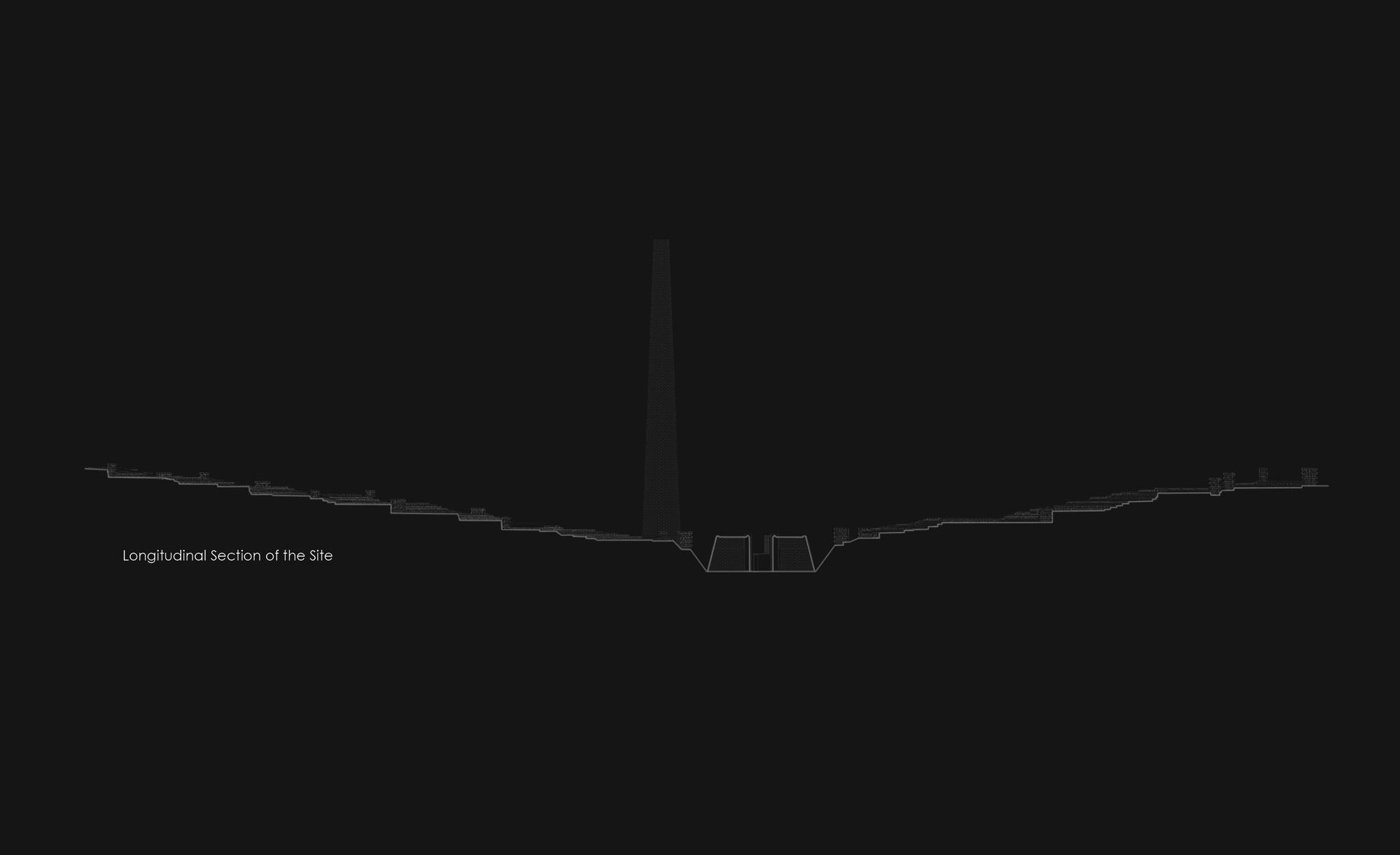
Within this fertile ground, architecture ceases to be a tool of concealment; it becomes a language of visibility, a medium for restoring dignity, and a quiet but persistent voice for justice and the right to be seen.
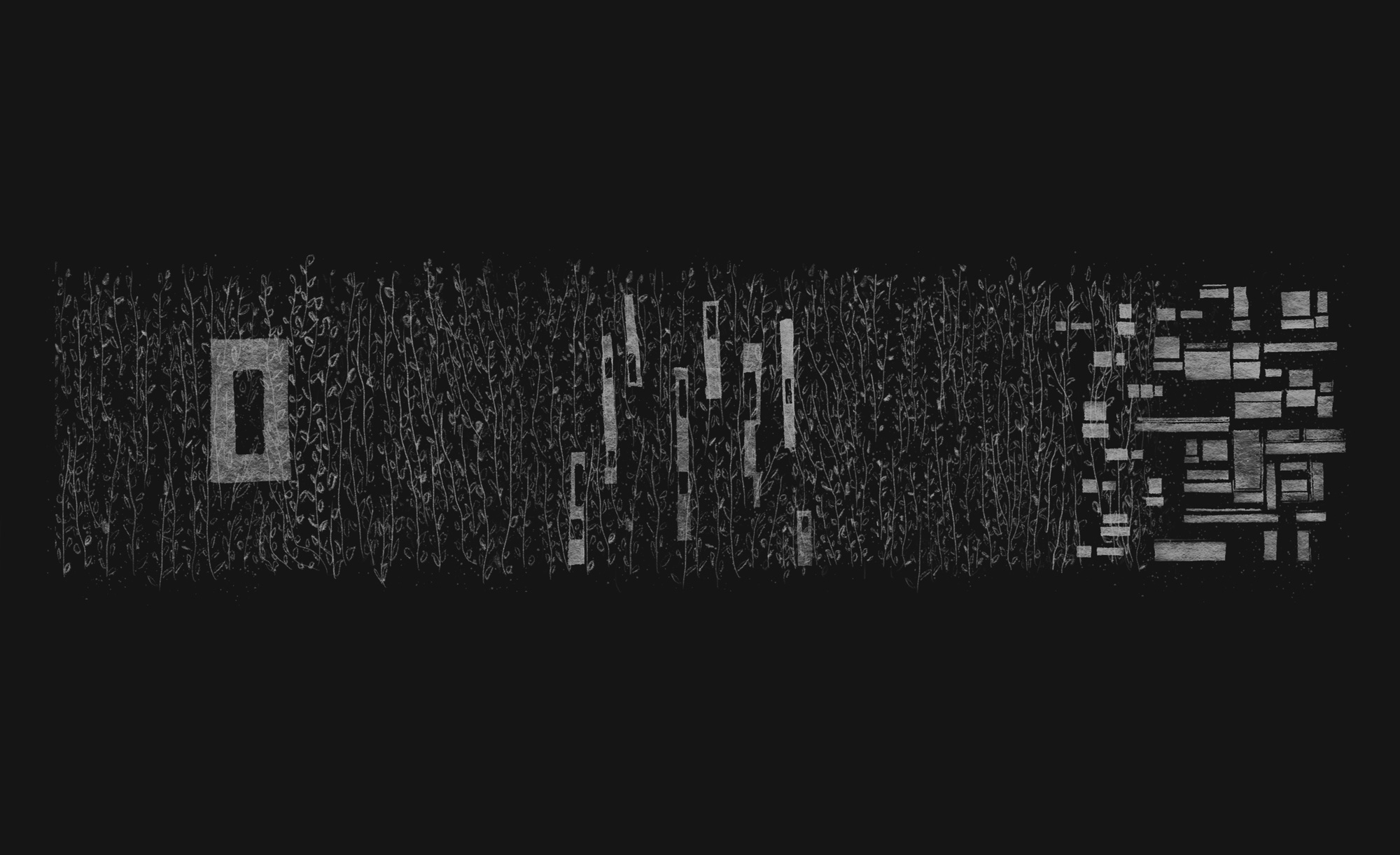
The design is anchored by three foundational principles
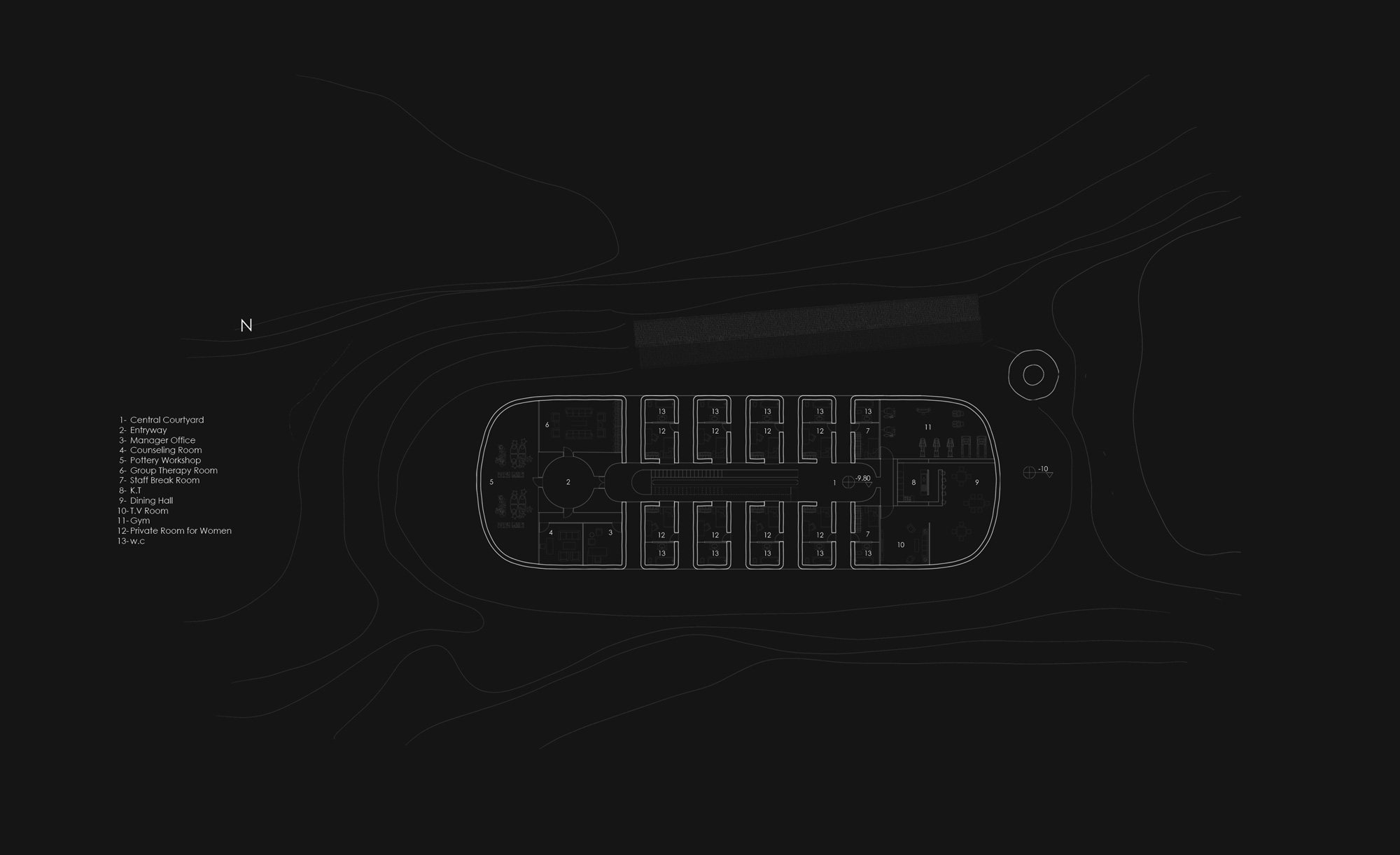
Layer One – Hidden Shelter Halophytic nature conceals and protects women’s lives within the heart of the historical kiln.
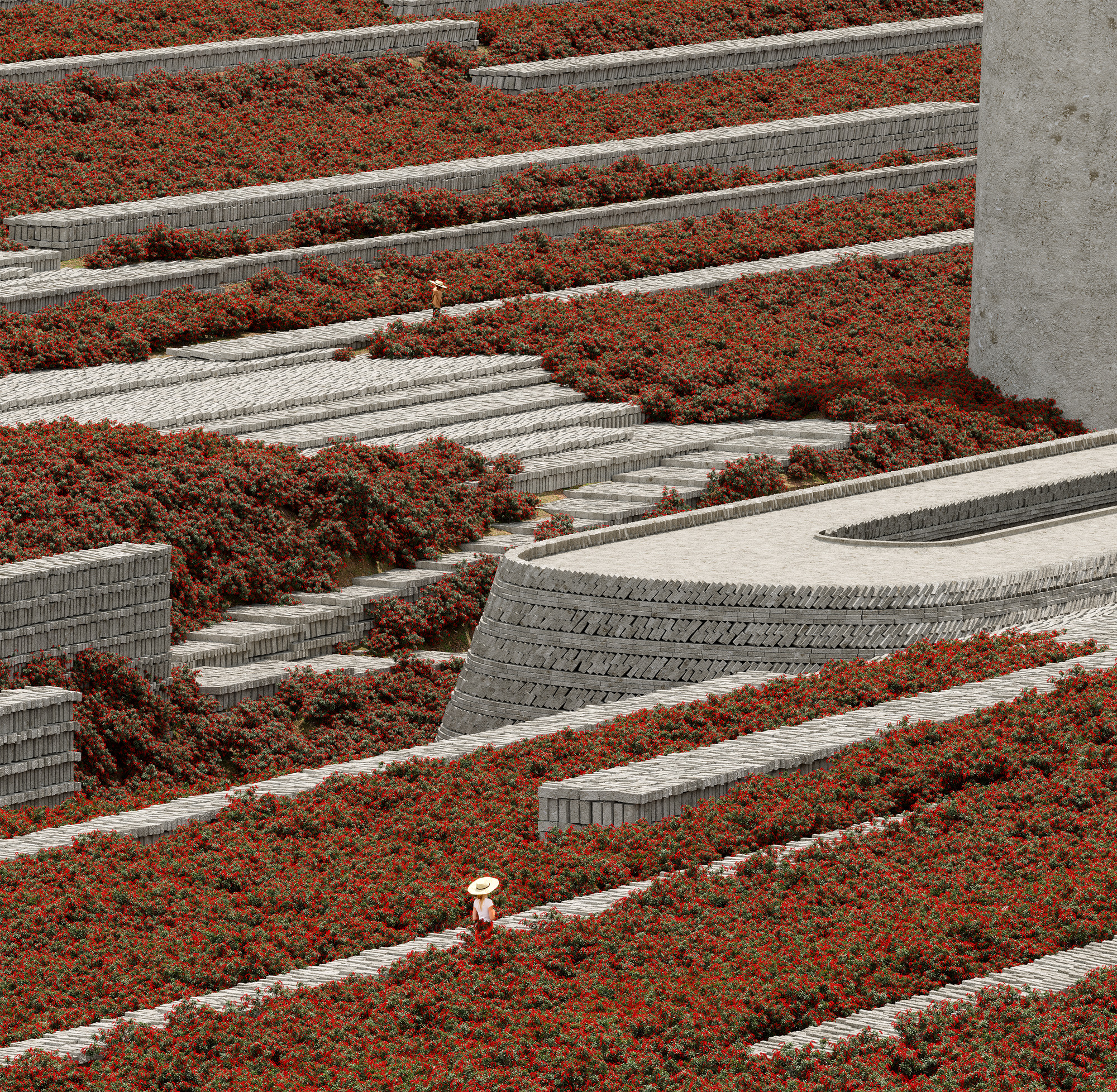
First, a minimal intervention strategy inspired by the site’s own logic—planting bed walls echo the dry-stacking brick technique of the kiln’s operational past, offering a porous structure that both references history and prevents soil erosion.
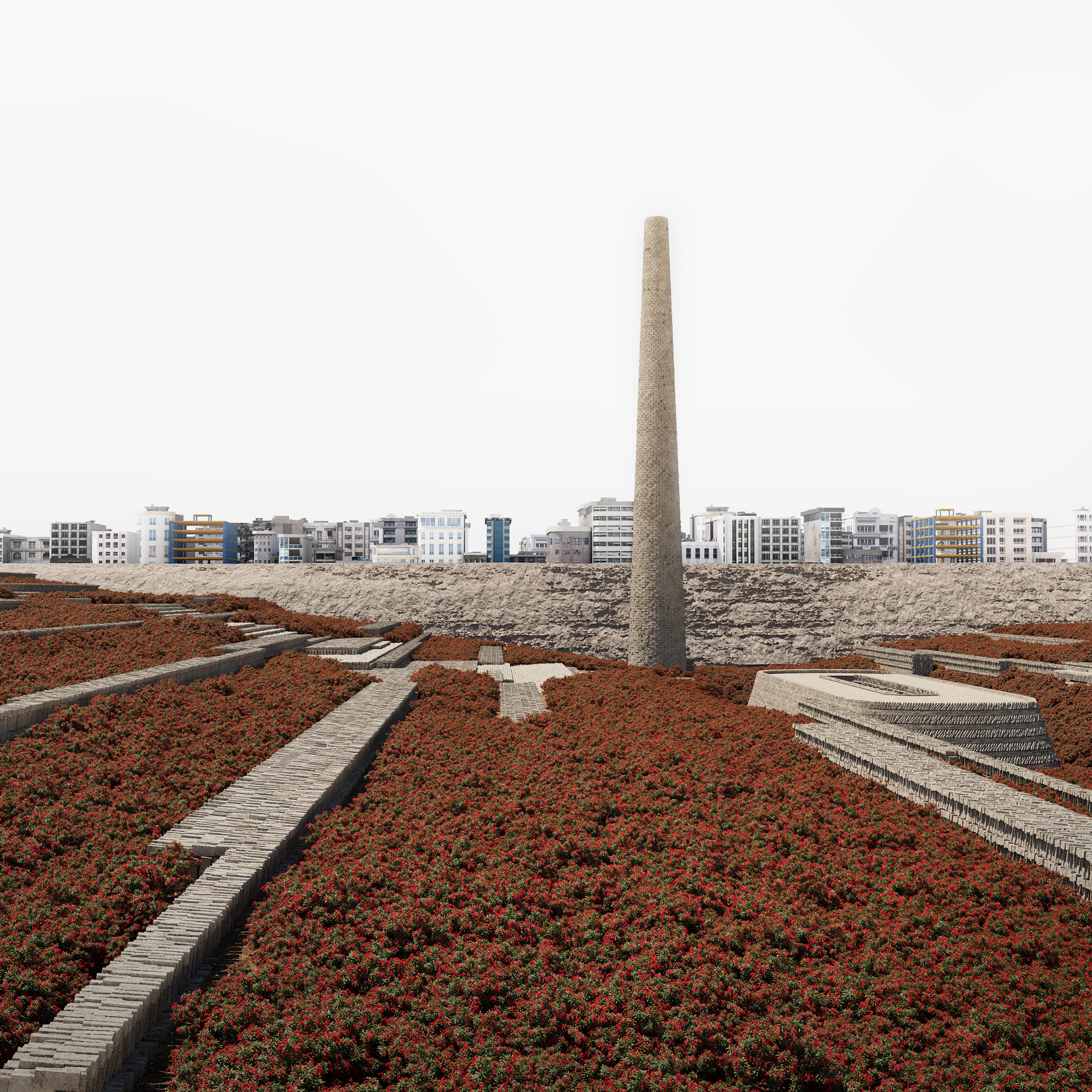
Second, material and economic sustainability—working with a limited budget and local materials, the project introduces greenhouses filled with resilient plants as platforms for self-sufficiency.
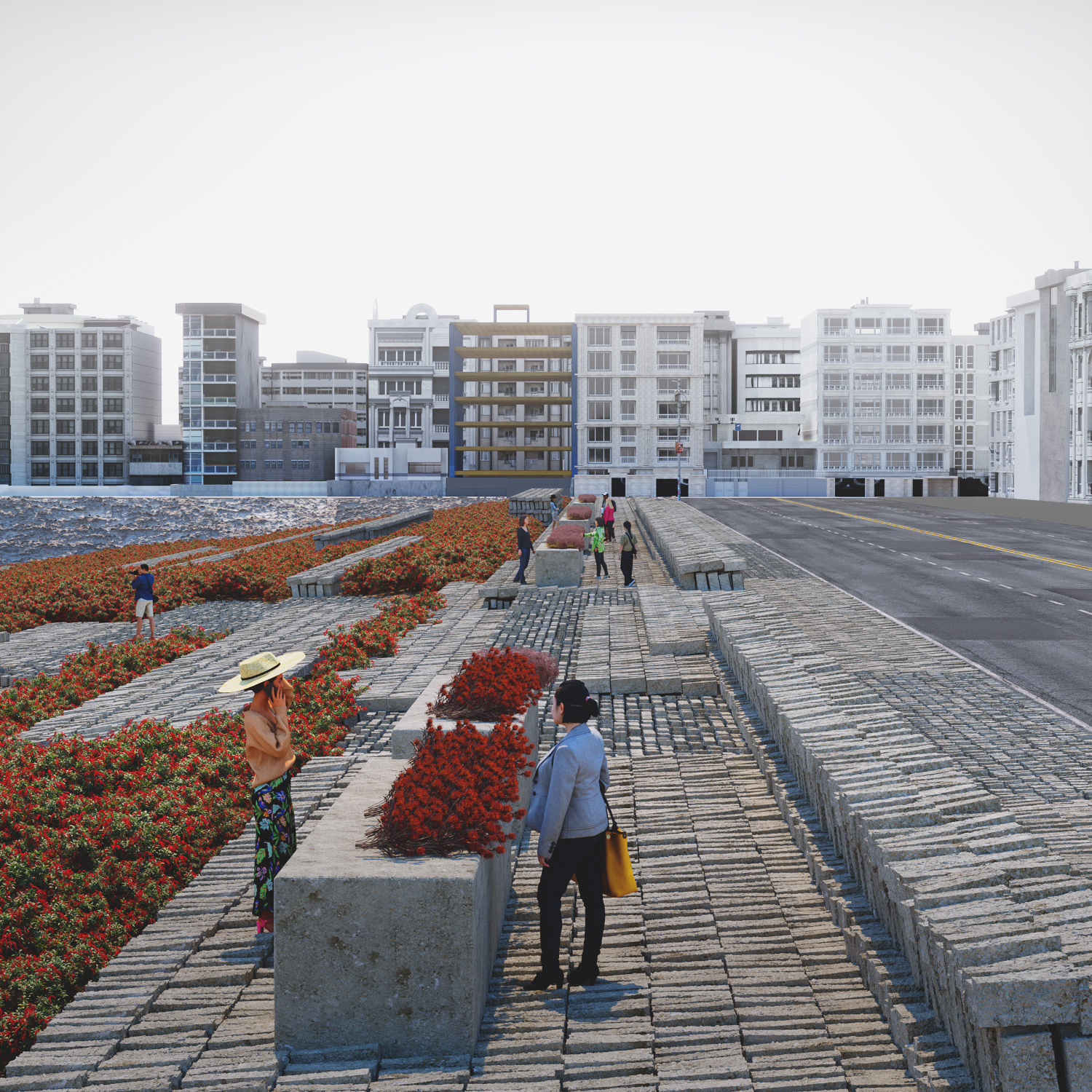
Third, architecture as process—residents are not passive recipients, but active participants in planting, maintenance, and harvesting; the space is shaped with them, not merely for them.
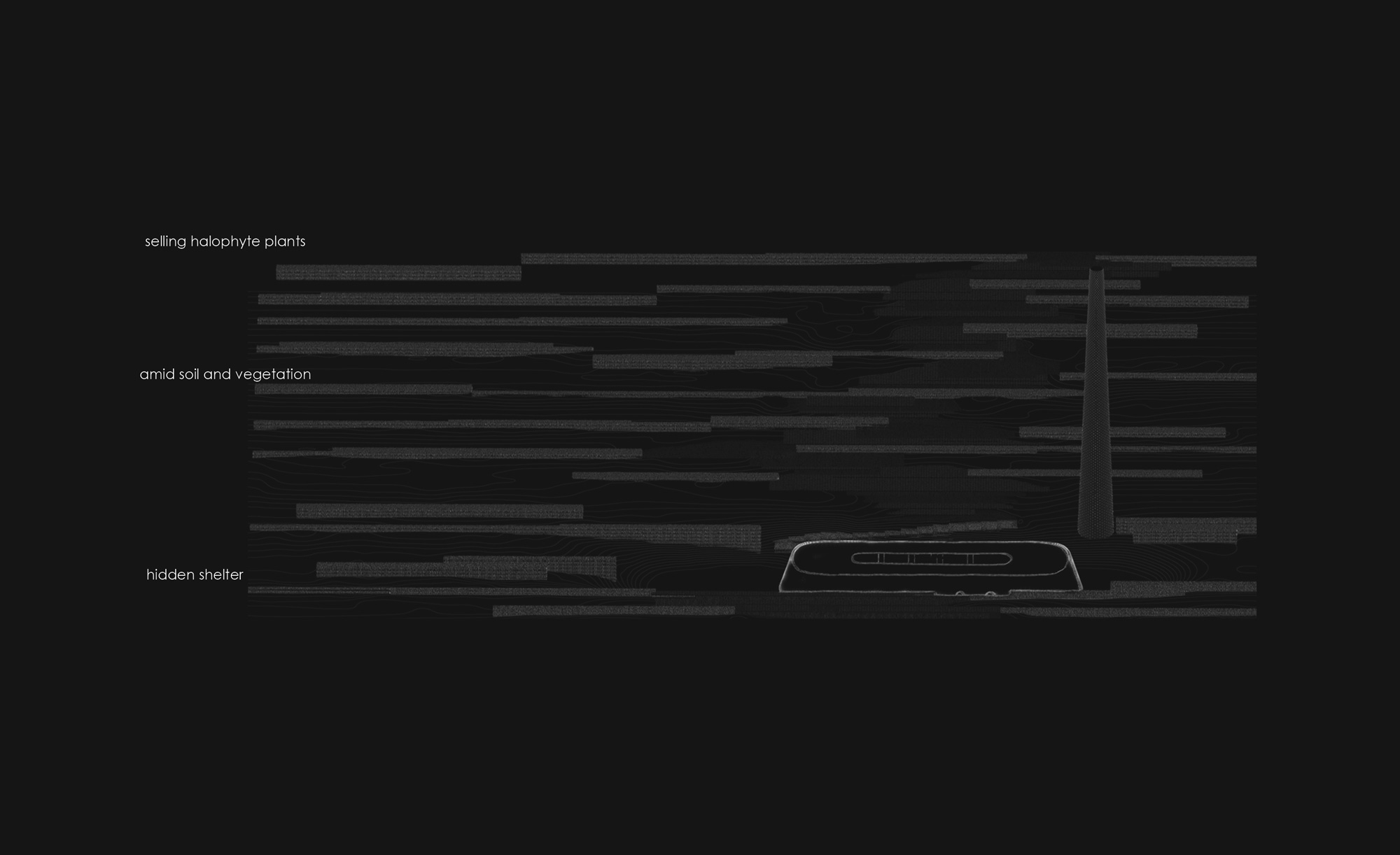
The project unfolds across three interwoven layers: theoretical, spatial, and narrative. Theoretically, visibility in Iran is not merely visual—it is political. Women must either disappear or conform to patriarchal norms of acceptability.
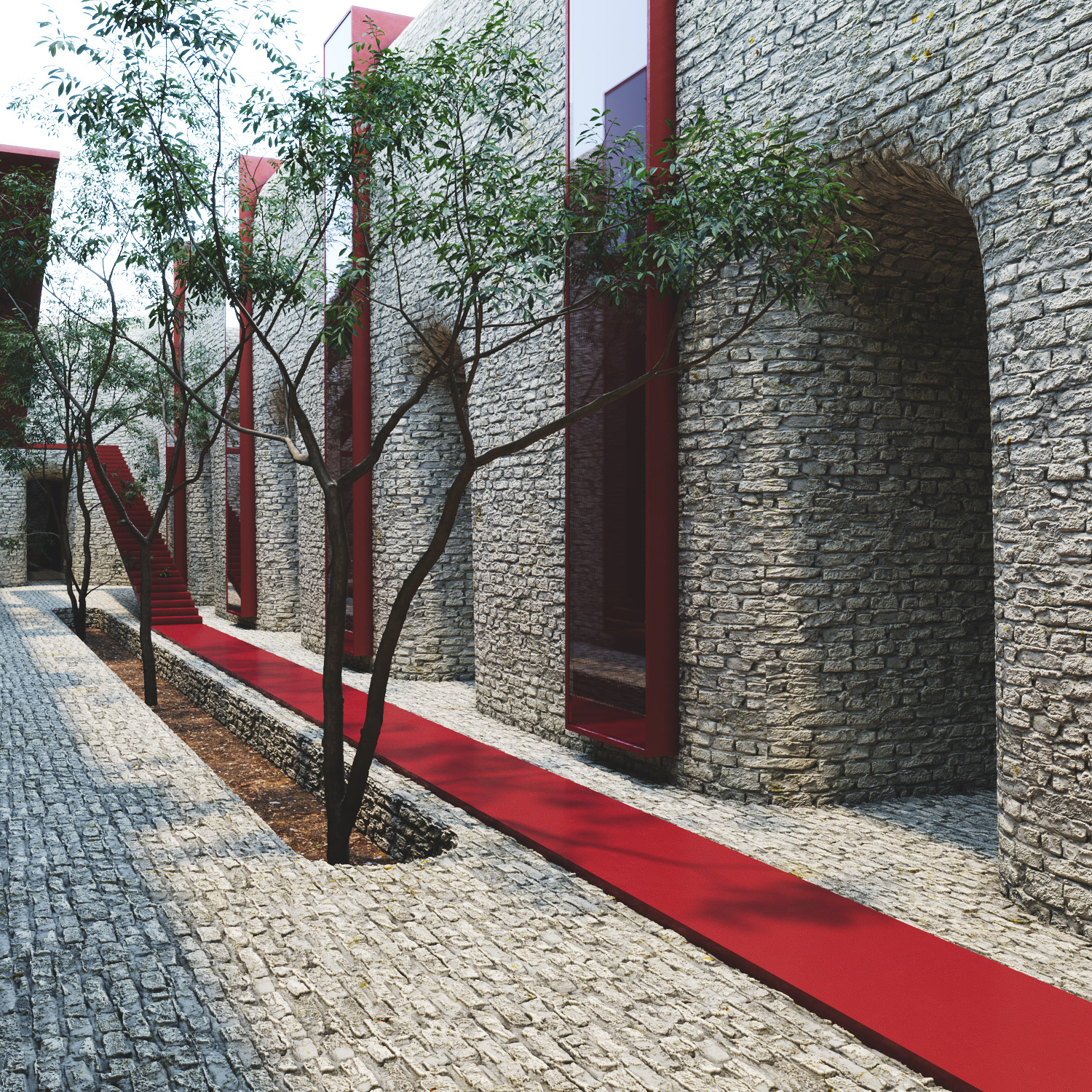
Spatially, the architecture forms three distinct visual zones: Hidden Shelter, Transitional Zone, and Social Presence—marking a passage from systemic erasure to public recognition. Narratively, women are seen as liminal subjects—active absentees who have resisted disappearance. Architecture must not only provide refuge, but enable presence without judgment.