Dereiçi | Vegetal Time
a Continuous Field
name: Living Ruin2. client: Terraviva competition. situation: Finalist
Living Ruins II is an international architecture competition organized by Terraviva, focused on rethinking abandoned villages and fragile historic landscapes through contemporary architectural strategies. Rather than treating ruins as frozen artifacts, the competition explores how architecture can engage with ongoing processes of decay, ecological transformation, memory, and inhabitation. Participants were invited to propose new relationships between preservation, landscape, tourism, and collective life within the village of Dereiçi in the Tur Abdin region of southeastern Turkey.
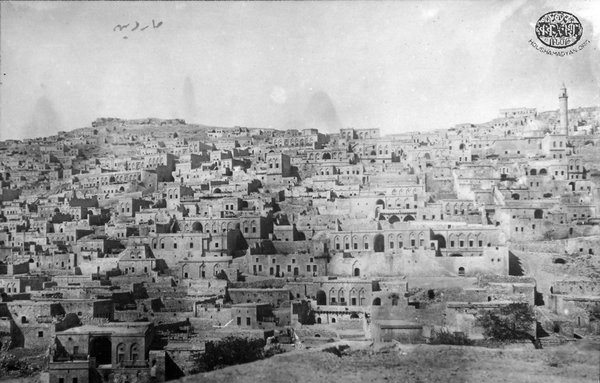
When examining Dereiçi, it becomes clear that this village is part of the broader territorial network of Mardin and Tur Abdin; a land with a long history of settlement, where human life has consistently been shaped through resistance, adaptation, and coexistence. In considering the transformation of this village into a destination for slow tourism, we began from this very geography of resistance and coexistence, as it operates not only spatially, but within a temporal framework distinct from the accelerated rhythms of contemporary life.
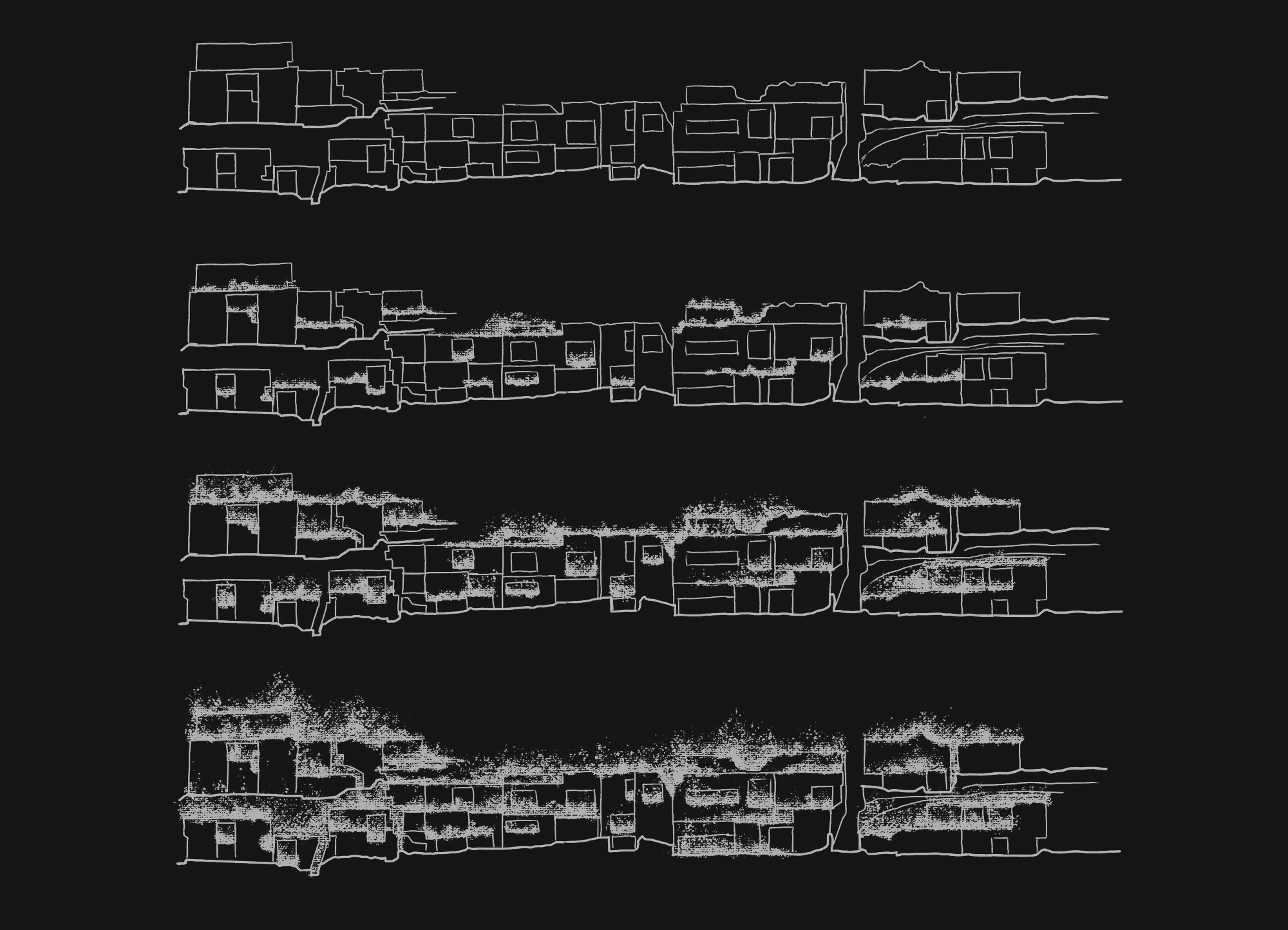
Historically, Dereiçi lived according to the rhythms of the plants cultivated in its vineyards. We therefore draw upon this temporal logic—cycles of vegetal growth, retreat, and seasonal change—but this time through the use of Astragalus (geven) species, native to the Tur Abdin region and specific to this geography, several of which are currently endangered. Through the cultivation and gradual expansion of these endangered species—plants that have, over centuries, adapted to shallow soils, calcareous terraces, and harsh climatic conditions—we both draw attention to threatened vegetation and reactivate the village’s terraces, which themselves constitute remnants of Tur Abdin’s architectural–ecological systems. Through the planting, growth, and seasonal transformation of Astragalus, the site emerges as a continuous and living field rather than a collection of discrete tourist destinations.
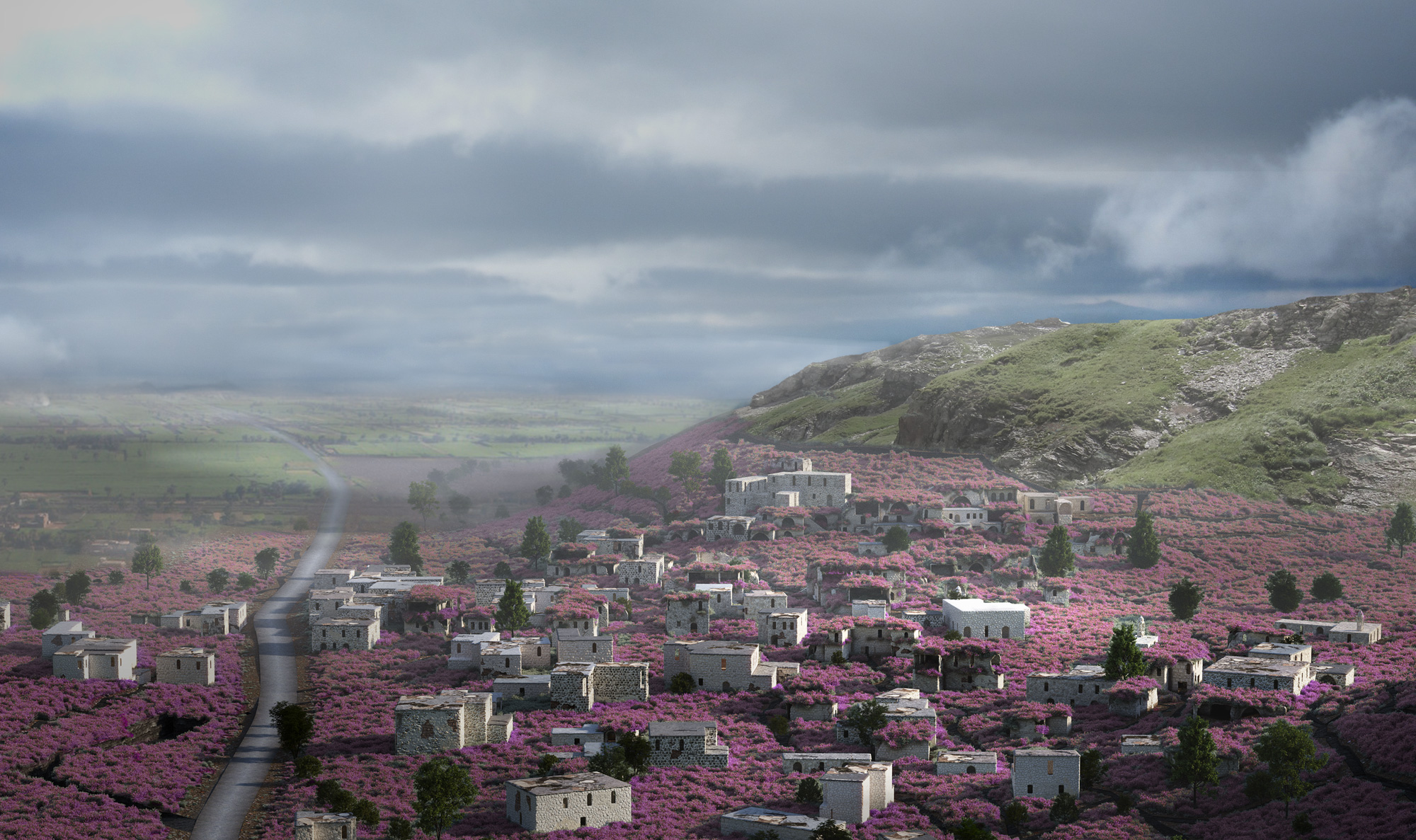
The terraces are transformed into wild gardens; not as aesthetic devices, but as an ecological infrastructure that organizes movement, pause, and bodily experience across the site. In this condition, the village never resolves into a fixed image, and each season presents a different version of itself. Within this framework, the open-air museum is not conceived as a container for objects, artworks, or exhibitions, but as a living museum of endangered plant species, where the plant itself becomes the primary medium of spatial experience. Visitors do not follow predetermined routes; instead, their movement responds to topography, vegetal density, and temporal change, gradually recalibrating their relationship to the l and and to geological time.
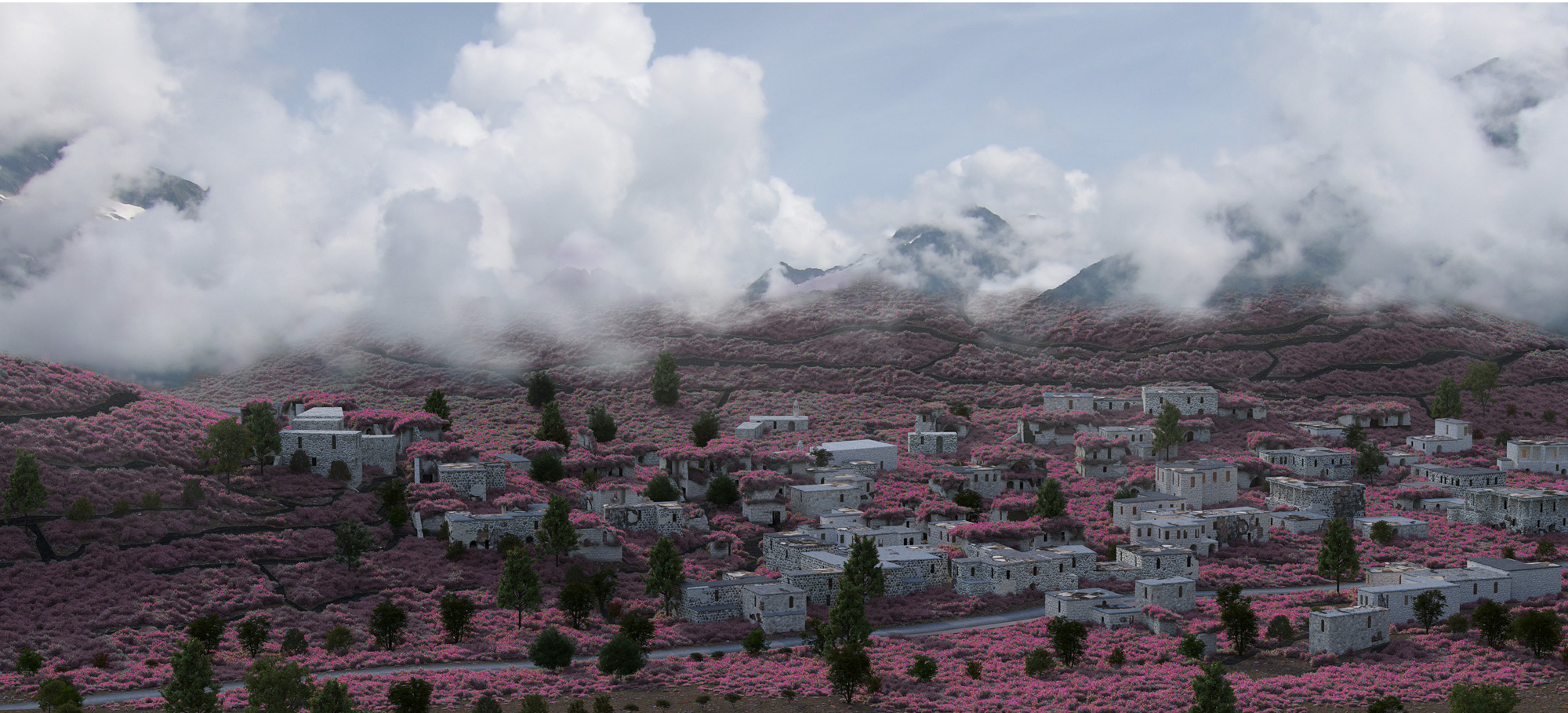
This biological continuity enables the gradual participation of local residents—from the care, cultivation, and harvesting of plants to guiding visitors, operating the visitor center, and forming small-scale accommodations. Economic activity is not positioned as the project’s primary objective, but rather as a natural consequence of sustaining this form of life and this alternative temporal condition. All architectural interventions are constructed from local limestone and are deliberately darkened to distinguish the contemporary layer of the project. Just as shifts in geological time are read through changes in coloration, this tonal difference signals the presence of the contemporary within the continuity of deep time, rather than an imitation of the past.
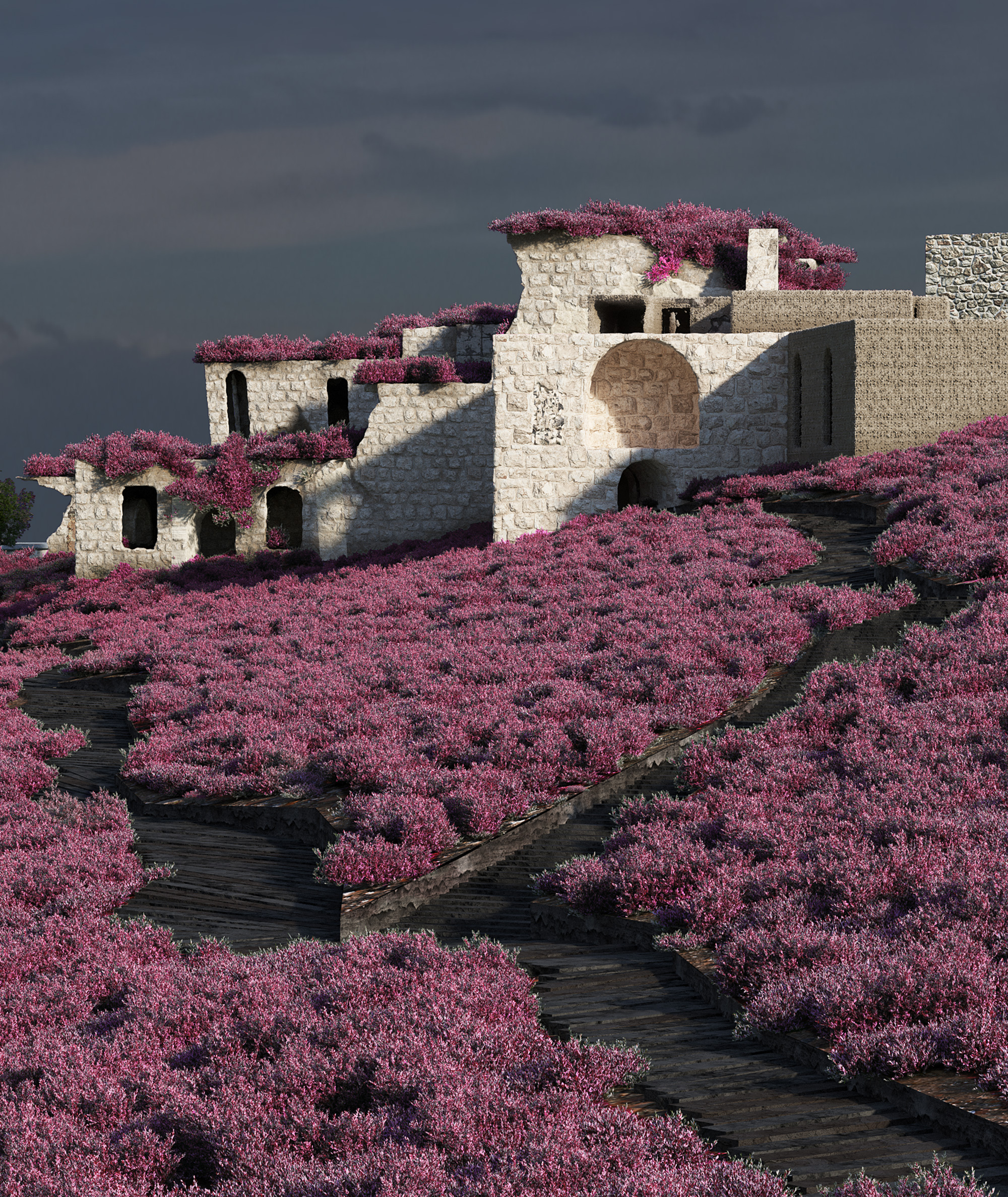
Ultimately, Dereiçi becomes an open-air museum—not as a fixed or finalized condition, but as a state of ongoing continuity. Here, vegetal time, seasonal change, and gradual care collectively shape the museum experience itself. Within this context, the village is neither reconstructed nor reduced to an image; it remains within the flow of geological time, as a mode of life defined by change, erosion, and endurance.
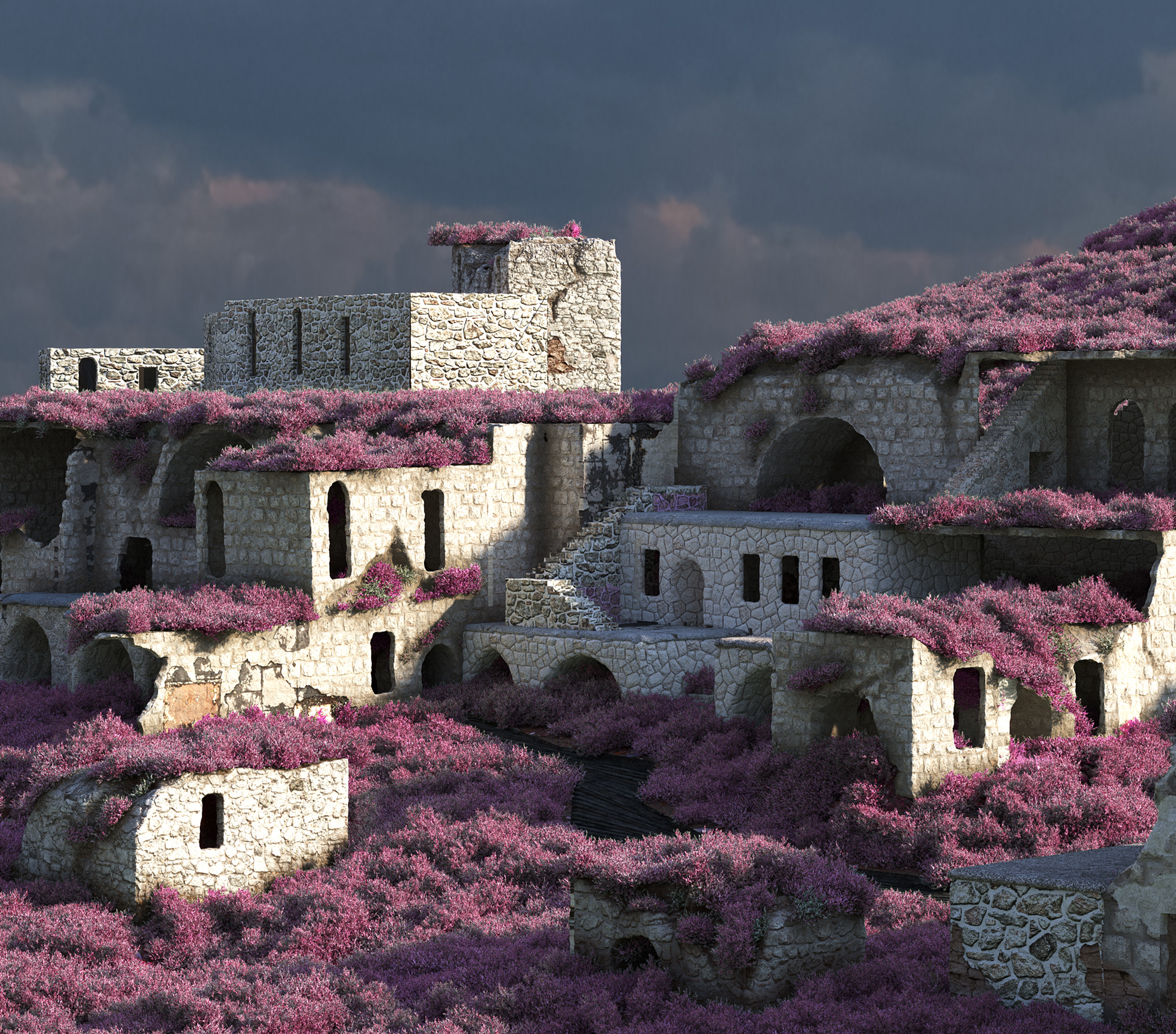
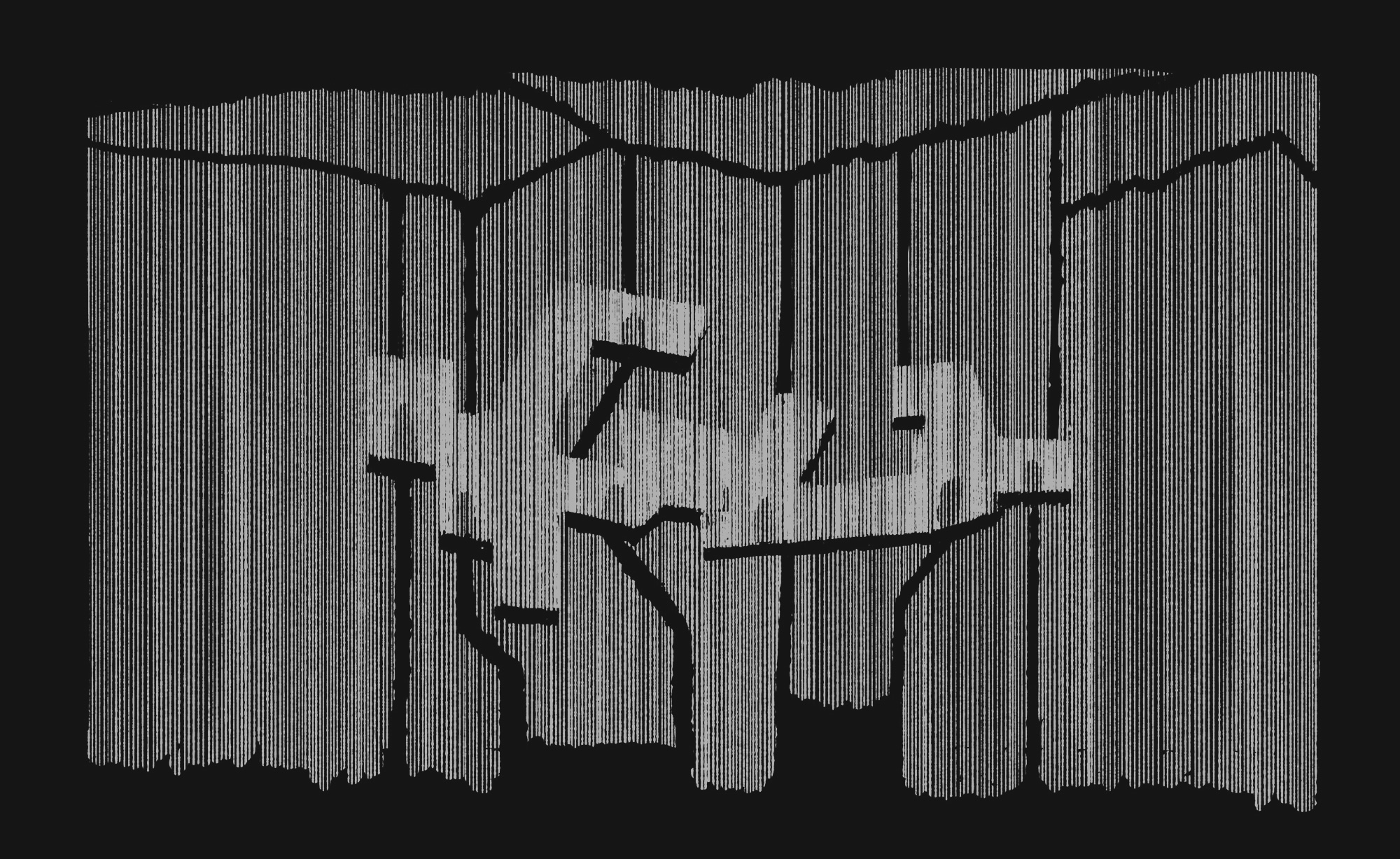
The project’s conceptual plan begins with a gradual descent underground. This entry is not merely a spatial move, but a deliberate temporal rupture: a slow and progressive transition from the surface, the proximity of the road, and the rhythms of everyday life into the limestone strata, where the time of the land reveals itself as slow, dense, and resistant. This compressed encounter with geological time does not function as a space of occupation, but as a temporal reference point that calibrates the entire project.
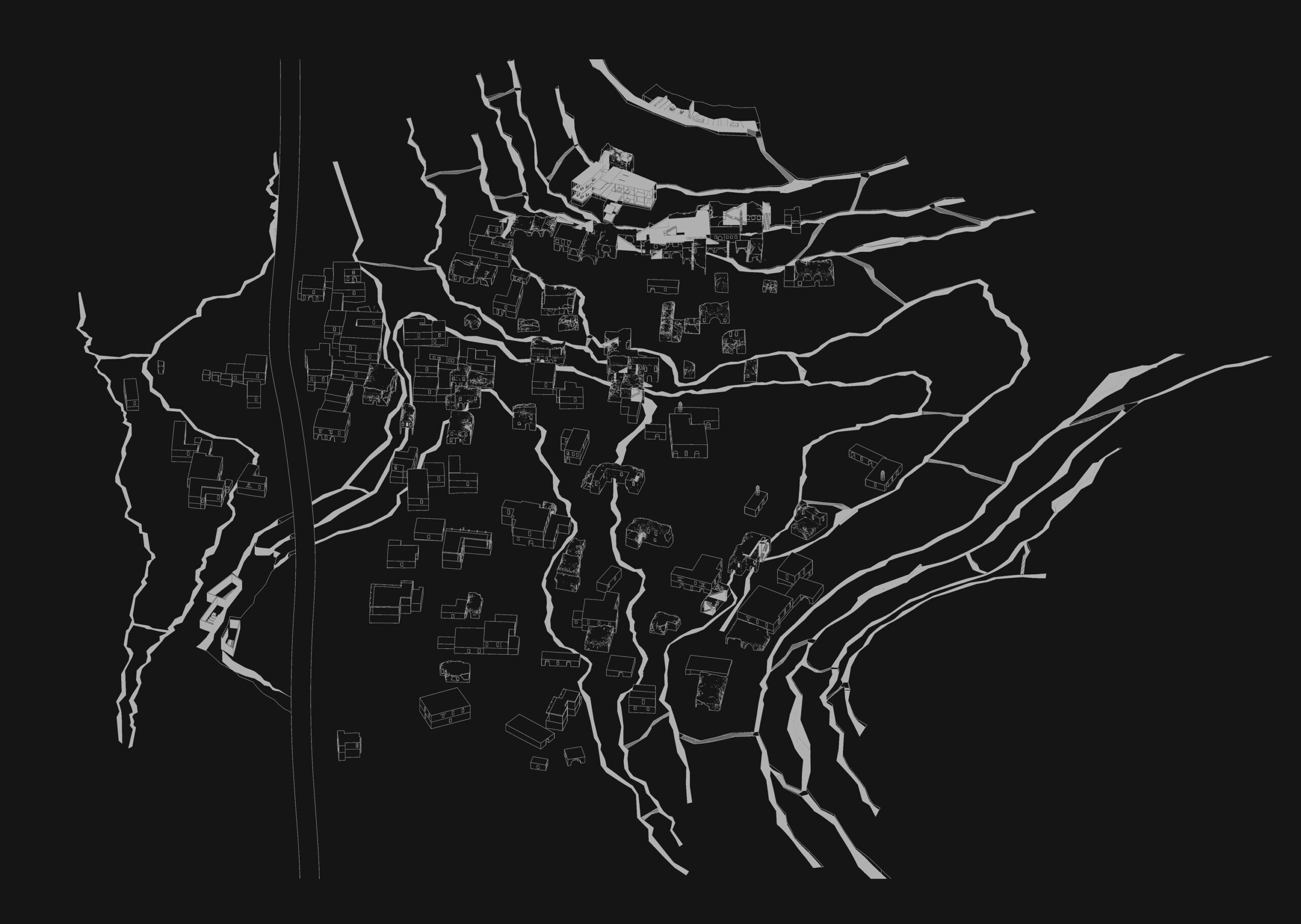
Following this short passage, movement returns to the surface and the spatial organization of the site unfolds according to the logic of land, topography, and vegetation. The landscape is not treated as a backdrop, but as a living and evolving system, whose rhythm is governed not by the linear time of the visitor, but by vegetal time. Within this framework, vegetation plays a central role, particularly three endangered native Astragalus species found in the Mardin and Tur Abdin region: Astragalus gummifer, Astragalus kurdicus, and Astragalus macrocephalus. Having adapted over centuries to shallow soils, calcareous terraces, and harsh climatic conditions, these species operate not only as biological elements but as carriers of a distinct temporal logic.
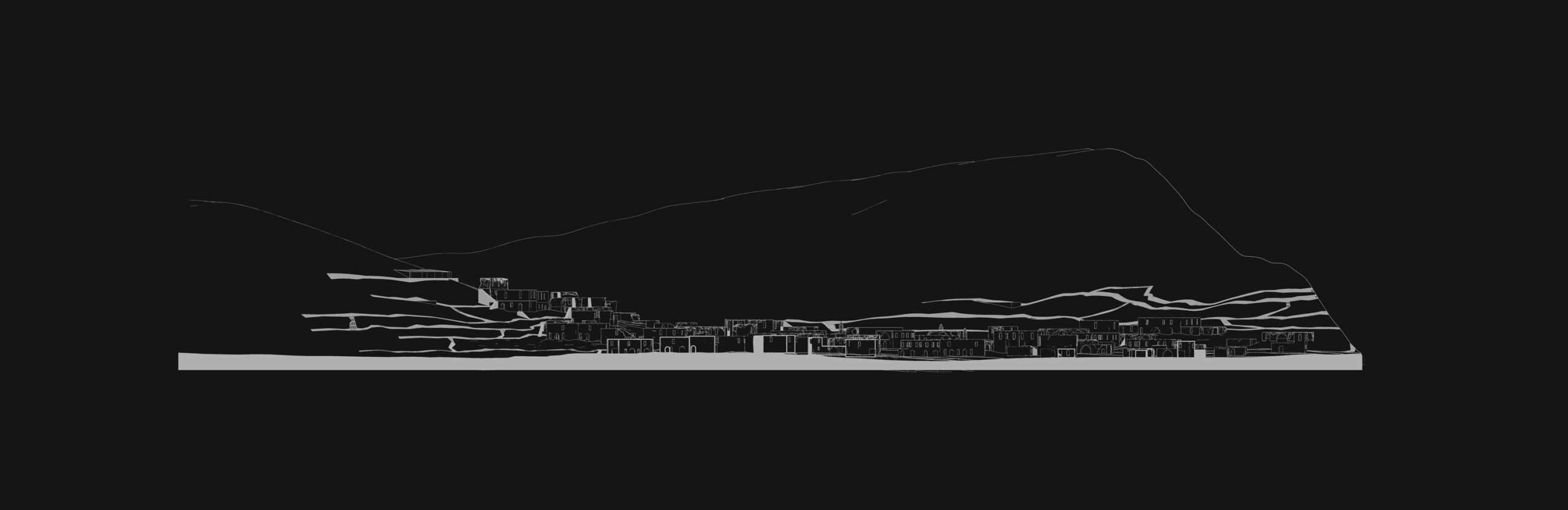
The growth, retreat, and seasonal transformation of these endangered species continuously redefine the spatial organization of the site, transforming the terraces into wild gardens-not as aesthetic devices, but as an ecological and temporal infrastructure. Within this land-based structure, paths do not function as dominant or guiding elements; instead, they emerge as a consequence of topography and vegetal density. Their non-linear configuration, aligned with the terrain, ensures that movement remains contingent upon land, vegetation, and time.Movement through the site culminates at elevated points overlooking the valley, where the terraced gardens become legible as a whole and vegetal time and seasonality converge. The return journey is not a repetition of the outward path; due to the non-linear structure of the paths, it generates new readings of the landscape. A final brief re-entry underground reactivates the slow time of the land before movement returns to the surface, establishing two distinct temporal conditions. Within this structure, architecture withdraws from the production of form and operates as a framework for continuity, in which the open-air museum is understood not as a fixed destination, but as a state of ongoing continuity, where Dereiçi remains embedded within geological time.